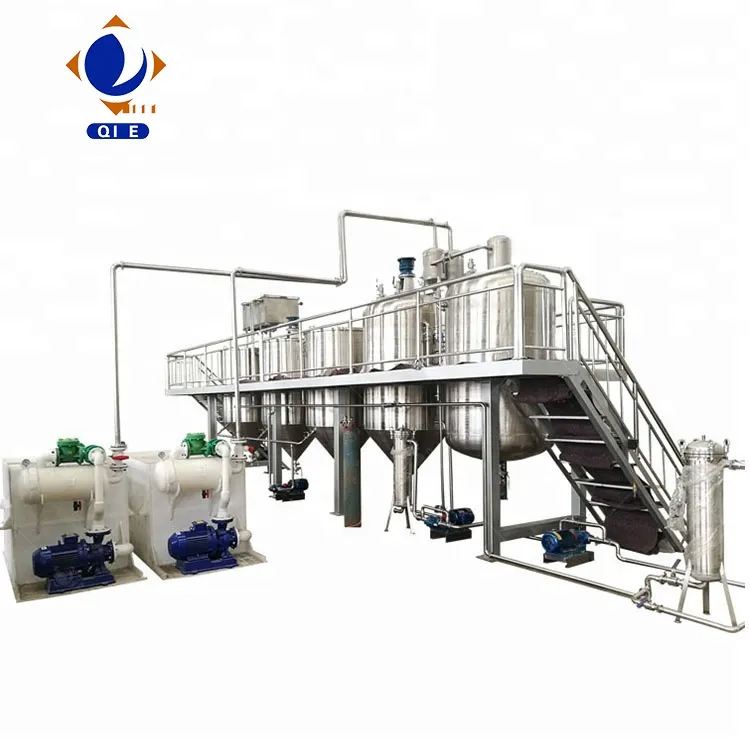
Improving oil pressing efficiency is not about relying on a single machine upgrade. In practical grain and oil processing, the result comes from coordinated control of the pre-treatment process, equipment performance, temperature management, continuous production, and maintenance practices. For buyers and engineers who want more stable output and better oil yield, these factors should be evaluated as one system.
At Qi'e Grain and Oil Machinery Co., Ltd., oil pressing equipment and production line solutions are designed with real production needs in mind. Whether the project involves a single oil press machine, a complete oil production line, or refining equipment, the key goal is the same: help customers achieve efficient, reliable, and process-consistent operation.
Raw material preparation has a direct impact on pressing performance. Cleaning, grading, crushing, flaking, conditioning, and moisture control all influence how smoothly the material enters the press and how much oil can be extracted in a stable way. When pre-treatment is not well controlled, the press may face uneven feeding, unstable discharge, or lower oil recovery.
Different materials and capacities require different equipment configurations. A suitable oil press, solvent extractor, or refining unit should match the intended production scale, raw material characteristics, and process flow. Equipment selection should support stable throughput rather than only focusing on nominal capacity.
Temperature affects oil flow, material softness, and processing stability. In many oil pressing applications, reasonable temperature control helps maintain consistency and can support better extraction conditions. The exact setting depends on the raw material and process route, so temperature should always be adjusted according to the production requirement rather than handled as a fixed value.
Interrupted feeding, inconsistent operation, or frequent shutdowns can reduce efficiency and complicate downstream processing. Continuous production helps the entire line run more predictably, supports better output control, and reduces unnecessary process loss. This is especially important in complete oil production lines where each section depends on the next.
Wear parts, lubrication, cleaning, and routine inspection all affect the long-term stability of oil pressing equipment. Regular maintenance helps reduce unexpected stoppages and supports consistent performance over time. Skilled operation is equally important, because proper feeding, adjustment, and monitoring can prevent unnecessary process fluctuations.
Improving oil pressing efficiency requires a system view. Each factor influences the others, and performance is strongest when the whole line is coordinated. The following table summarizes the main relationship points.
| Focus Area | What to Watch | Why It Matters |
|---|---|---|
| Pre-treatment | Cleaning, crushing, conditioning, moisture control | Supports smooth feeding and stable extraction conditions |
| Equipment | Capacity, structure, compatibility, reliability | Determines whether the line can run steadily under real production load |
| Temperature control | Material condition, process setting, heating consistency | Helps maintain a suitable pressing environment |
| Continuous production | Feeding stability, line coordination, shutdown frequency | Reduces interruptions and improves operational efficiency |
| Maintenance | Wear parts, inspection, cleaning, lubrication | Supports long-term consistency and reduces avoidable downtime |
As a manufacturer focused on oil pressing equipment, oil production line equipment, and oil refining equipment, Qi'e Grain and Oil Machinery Co., Ltd. provides more than standalone machines. The company supports customers with design, installation, technical service, and process coordination so that equipment can be integrated into practical production settings.
This approach is especially relevant for projects in Asia, Africa, and South America, where buyers often need equipment that is reliable, adaptable, and suitable for different operating conditions. By aligning equipment selection with production goals, the entire line can be planned more effectively from the beginning.
In oil pressing projects, efficiency is achieved through the cooperation of process design, equipment performance, operating discipline, and maintenance management. When these elements are matched correctly, production becomes more stable and the system is easier to manage.
If you are planning an oil pressing project or looking to improve the performance of an existing line, Qi'e Grain and Oil Machinery Co., Ltd. can help you evaluate the process, select suitable equipment, and build a solution that fits your production goals.