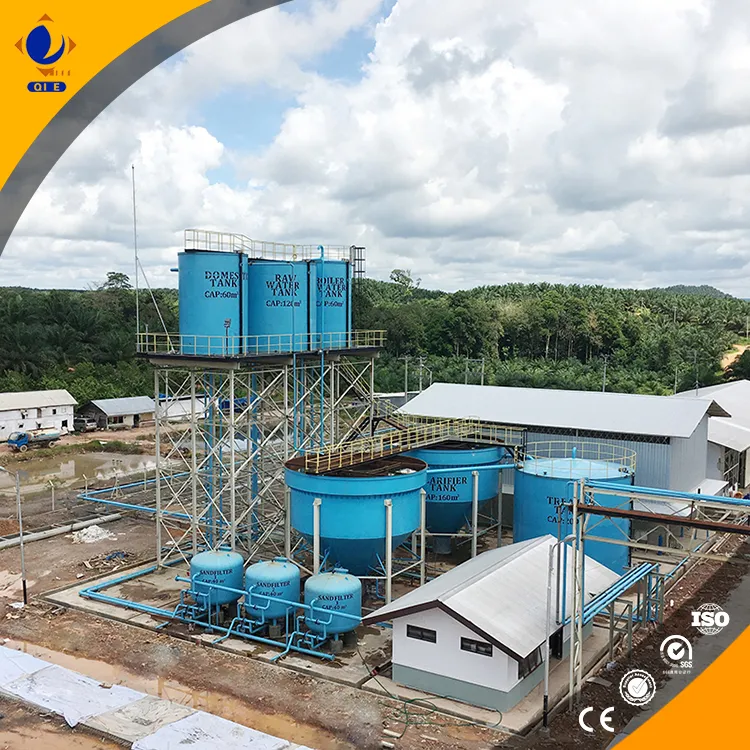
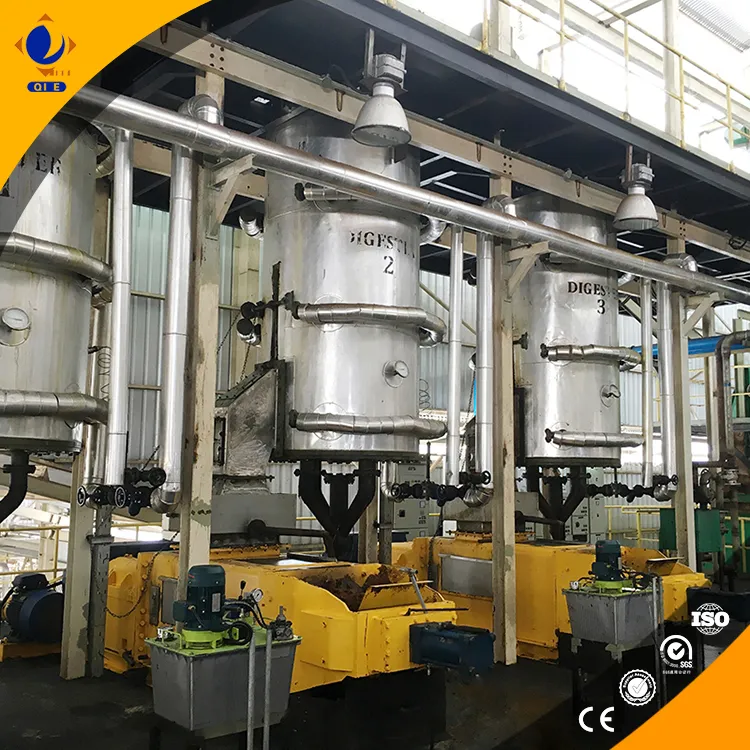
Planning an edible oil production line starts with one core question: what kind of oilseed will be processed, and what finished oil quality is required? From that point, every major decision becomes clearer—whether the project should use pressing, solvent extraction, refining, or a combination of processes; how much pretreatment is needed; what level of automation is appropriate; and how the plant layout should support stable production.
Qi'e Grain and Oil Machinery Co., Ltd. works with B2B buyers in Asia, Africa, and South America to provide oil pressing equipment, oil production line equipment, and oil refining equipment for edible oil processing projects. For buyers at the project-planning stage, a well-structured equipment plan helps reduce uncertainty and makes later communication with the machinery supplier more efficient.
Different oilseeds behave differently in processing. Their moisture content, shell characteristics, oil content, and intended market all influence the line design. A production line for soybean oil will not be configured the same way as a line for palm kernel oil, sunflower seed oil, or a smaller multipurpose pressing project.
Key planning point: the oilseed determines pretreatment needs, process selection, and the most suitable equipment combination.
A practical edible oil production line is usually built around one of three basic process directions: pressing only, solvent extraction, or pressing plus refining. The right route depends on the oilseed type, the required oil yield, and the expected quality standard.
| Process option | Typical focus | Planning consideration |
|---|---|---|
| Pressing | Mechanical oil extraction with straightforward operation | Suitable for projects that prioritize simpler operation and moderate investment structure |
| Solvent extraction | Higher oil recovery from certain oilseeds and cakes | Requires careful process design, safety control, and suitable plant conditions |
| Pressing + refining | Improved oil quality for commercial edible oil output | Needs matching refining targets, process flow, and equipment configuration |
Pretreatment is often the stage that decides whether the production line runs smoothly. Depending on the oilseed and final product requirements, pretreatment may include cleaning, de-stoning, shelling, cracking, conditioning, flaking, or other preparatory steps. A well-designed pretreatment section supports better extraction efficiency and more stable downstream performance.
Why pretreatment matters:
If the project requires refined edible oil, the refining section should be planned according to the expected market, packaging standard, and oil quality target. Refining objectives can differ from one project to another, so the equipment configuration should reflect the intended product rather than a generic line layout.
A production line should not be designed around equipment alone. Capacity target, automation level, available building space, utility conditions, and local operating requirements all affect the final solution. For a small project, a compact oil mill plant may be more practical. For larger commercial projects, a more complete oil production line with coordinated sections may be required.
Qi'e Grain and Oil Machinery Co., Ltd. does more than supply equipment. For edible oil processing projects, the company supports buyers with equipment selection, line design, installation guidance, and technical service, helping transform a project idea into a practical production plan.
Project-oriented approach: the goal is to align process flow, equipment selection, and factory conditions so the line is suitable for real production, not just theoretical design.
Before discussing a tailored proposal, it helps to prepare the core project details. This makes the planning process faster and improves the relevance of the recommended equipment configuration.
A well-planned edible oil production line begins with the right process logic and ends with an equipment configuration that matches the project reality. With experience in oil pressing equipment, oil production line equipment, and oil refining equipment, Qi'e Grain and Oil Machinery Co., Ltd. supports buyers who need a clear and practical starting point for their next edible oil processing project.